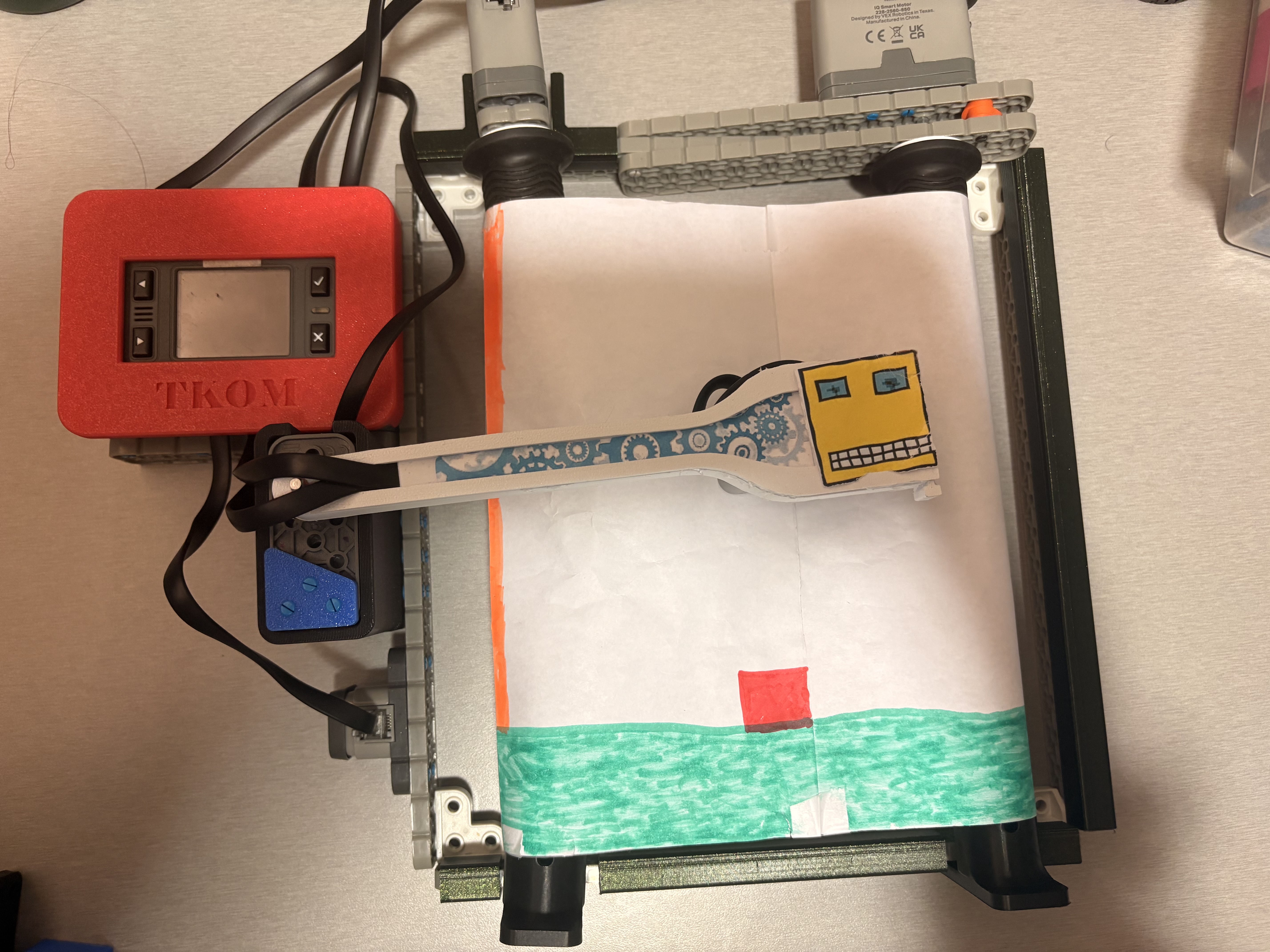
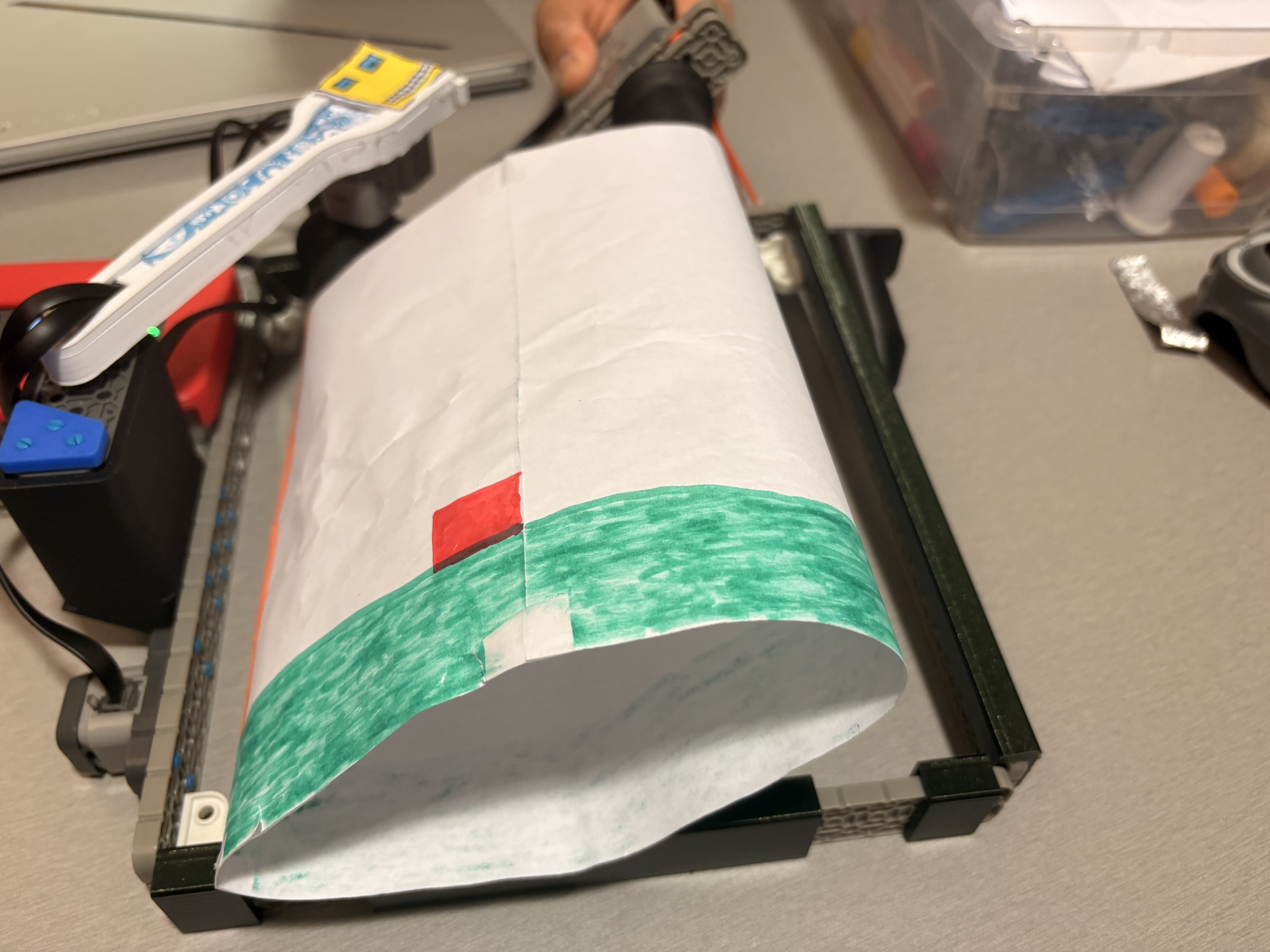
This robot plays hand-drawn 2D games on a scrolling paper belt using color sensing, roller motors, and a swinging player arm. Play anything from platformers, to mazes, rhythm games, and more!
Mechanical
SolidWorks
CAD
Design for 3DP
3D Printing
Electrical
Software
C++
Team Project
Human-Centered Design
Mechatronic
Final Report
Problem
Kids spend too much time on screens. We need an alternative that's just as stimulating, but also improves creativity and mental function.
Solution
TKOM emulates functionality seen in many video games, with the twist of having kids make their own maps and rules!
Mechanical Highlights
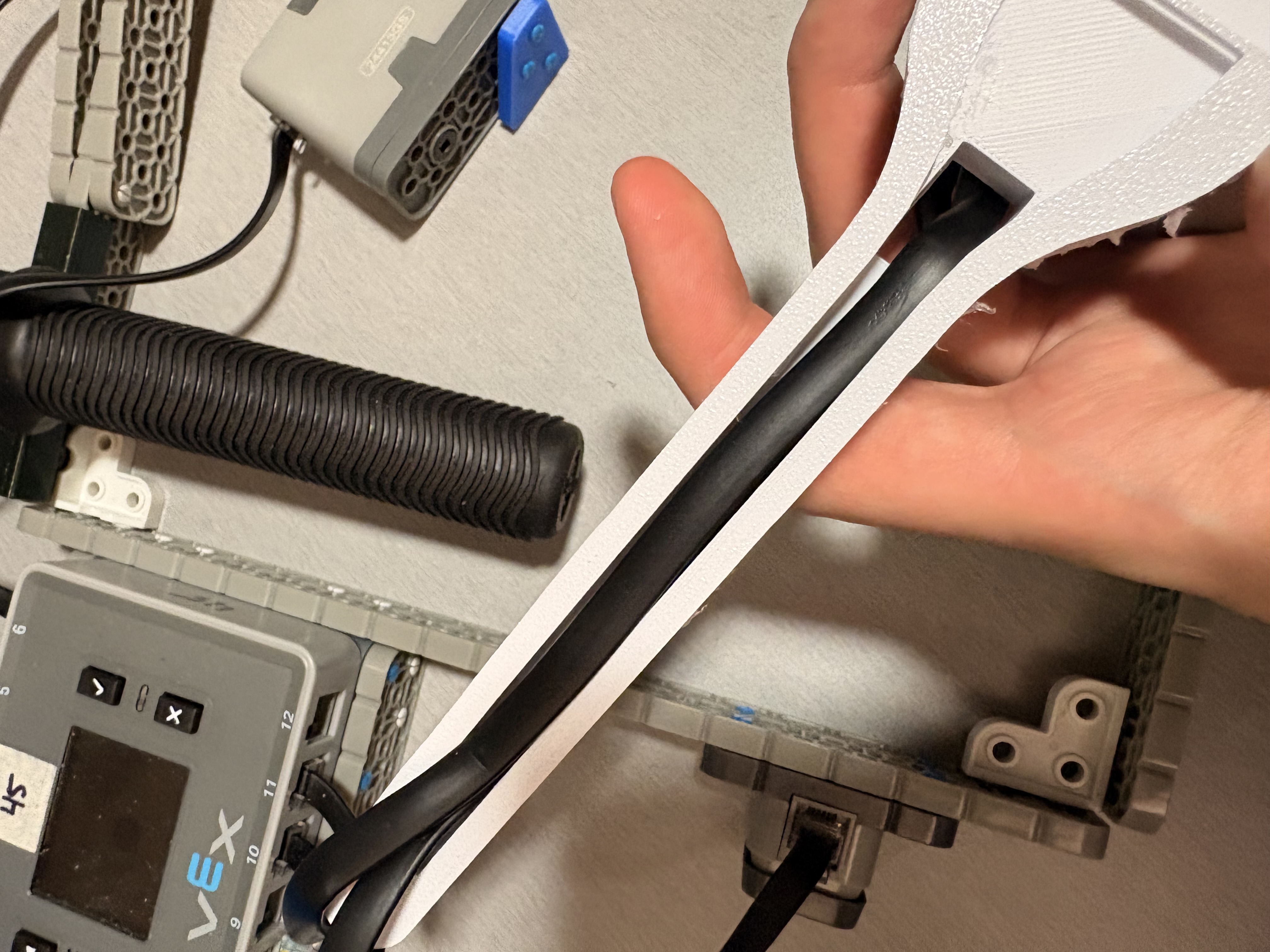
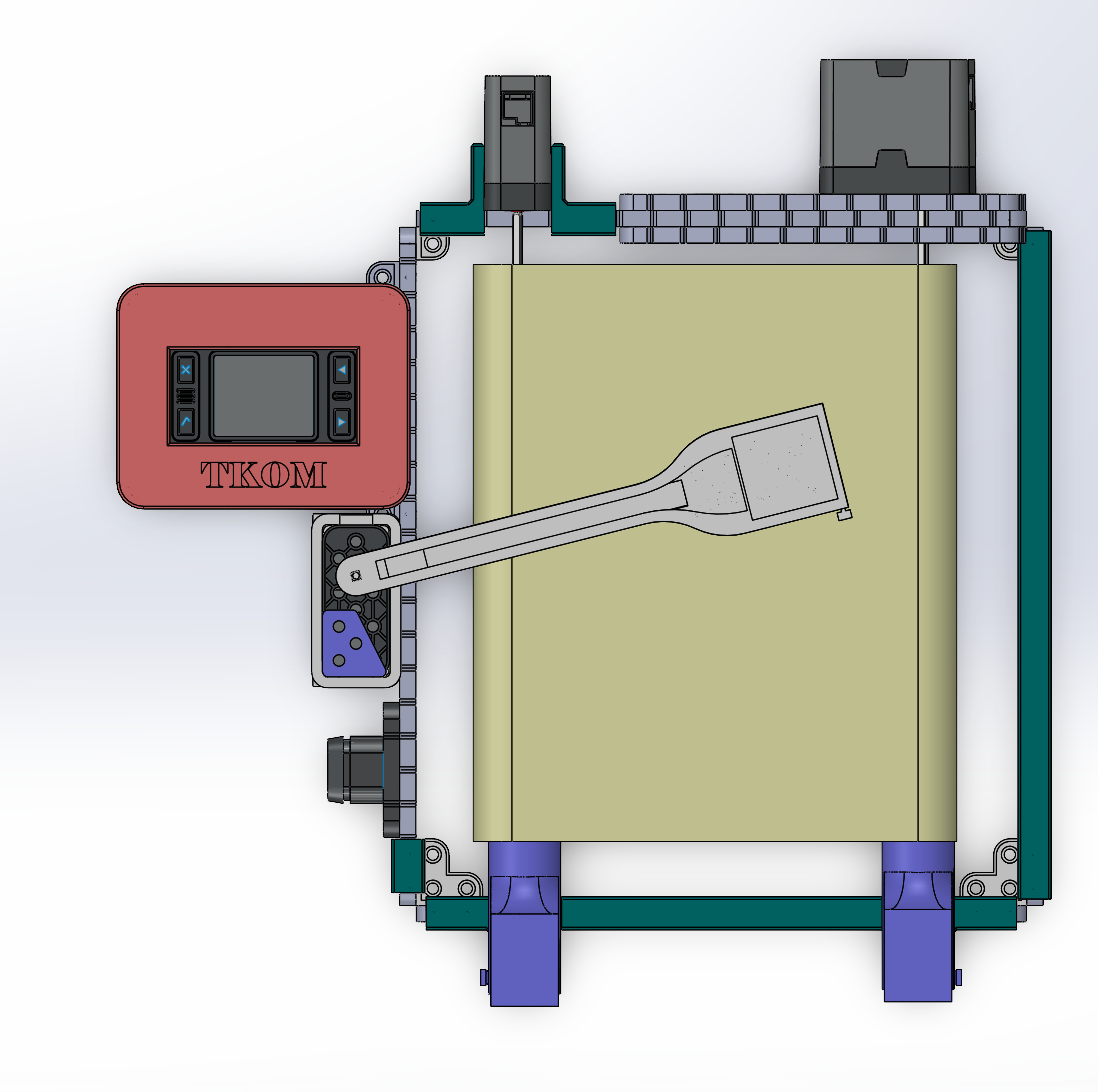
- Player arm visibility: thin profile in the paper plane with hidden sensor wiring. Spline geometry and white material cut shadows so drawings stay visible.
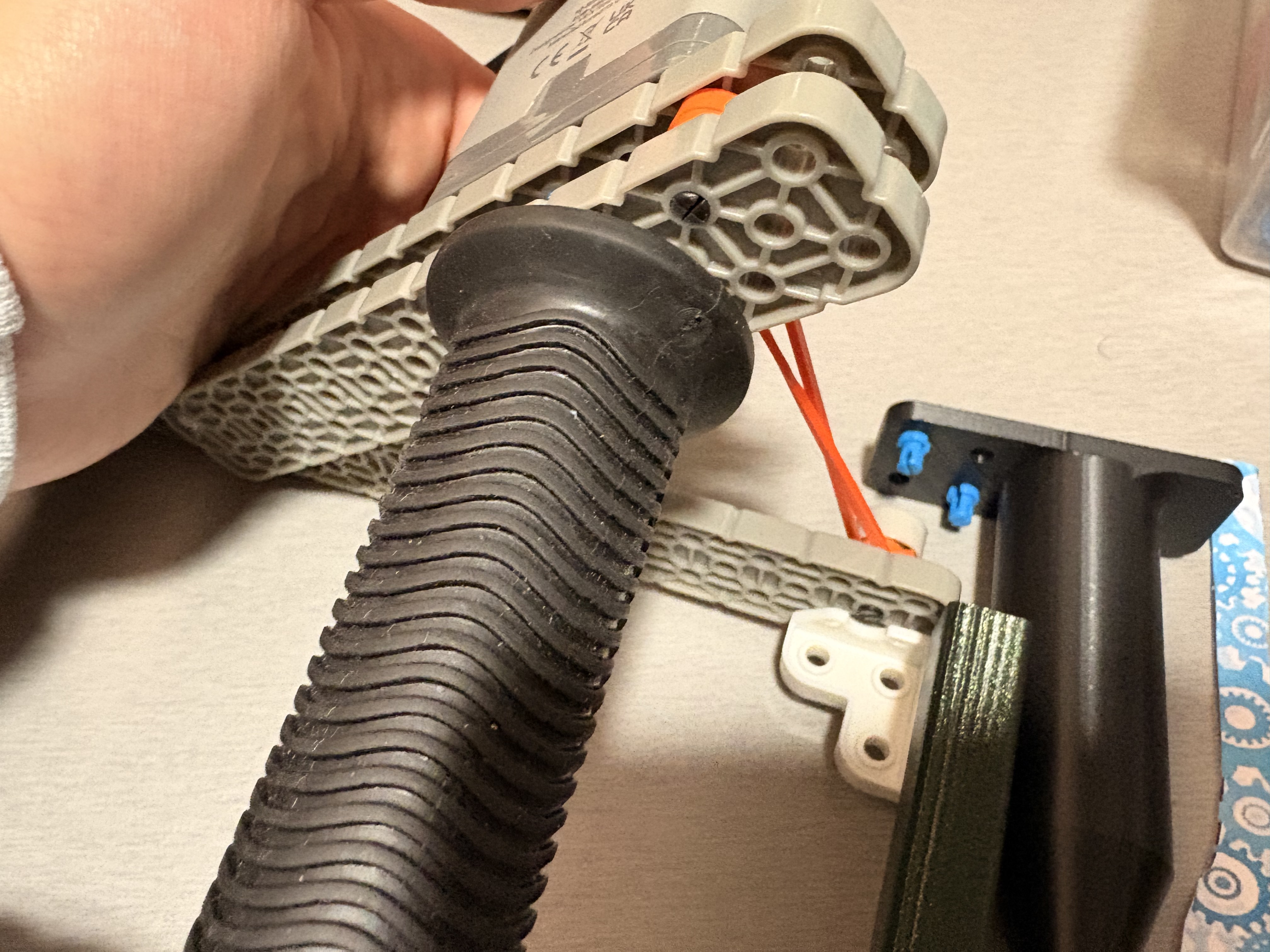
- Traction + transport: bicycle grips contact the paper and custom 3D-printed inserts interference-fit to the grips to transfer torque. Two roller motors prevent back-driving and enable reverse/extended runs.
- Paper tensioning: top tensioner with elastic band, dual shafts, free axle, and four plates keeps the belt taut while the user loads the paper.
- Fast iteration build: all parts FDM/FFF printable without supports and and use pins or clips to allow quick assembly/disassembly for testing.
Software Highlights
- Tick loop: game ticks drive gravity, jumps, scoring, and autoscroll.
- Color sensing: hue ranges drive map actions — green 100–160 (ground), blue 170–300 (add score), red 0–20 (remove score/end), finish marker (yellow/orange) 20–30.
- Scroll compensation: player arm angle is mapped to belt speed so jumps stay vertically aligned despite the angular player motion.
- Jump system: user can configure jumps to be 1, 2, or infinite based on the game loaded into the robot.
Image gallery