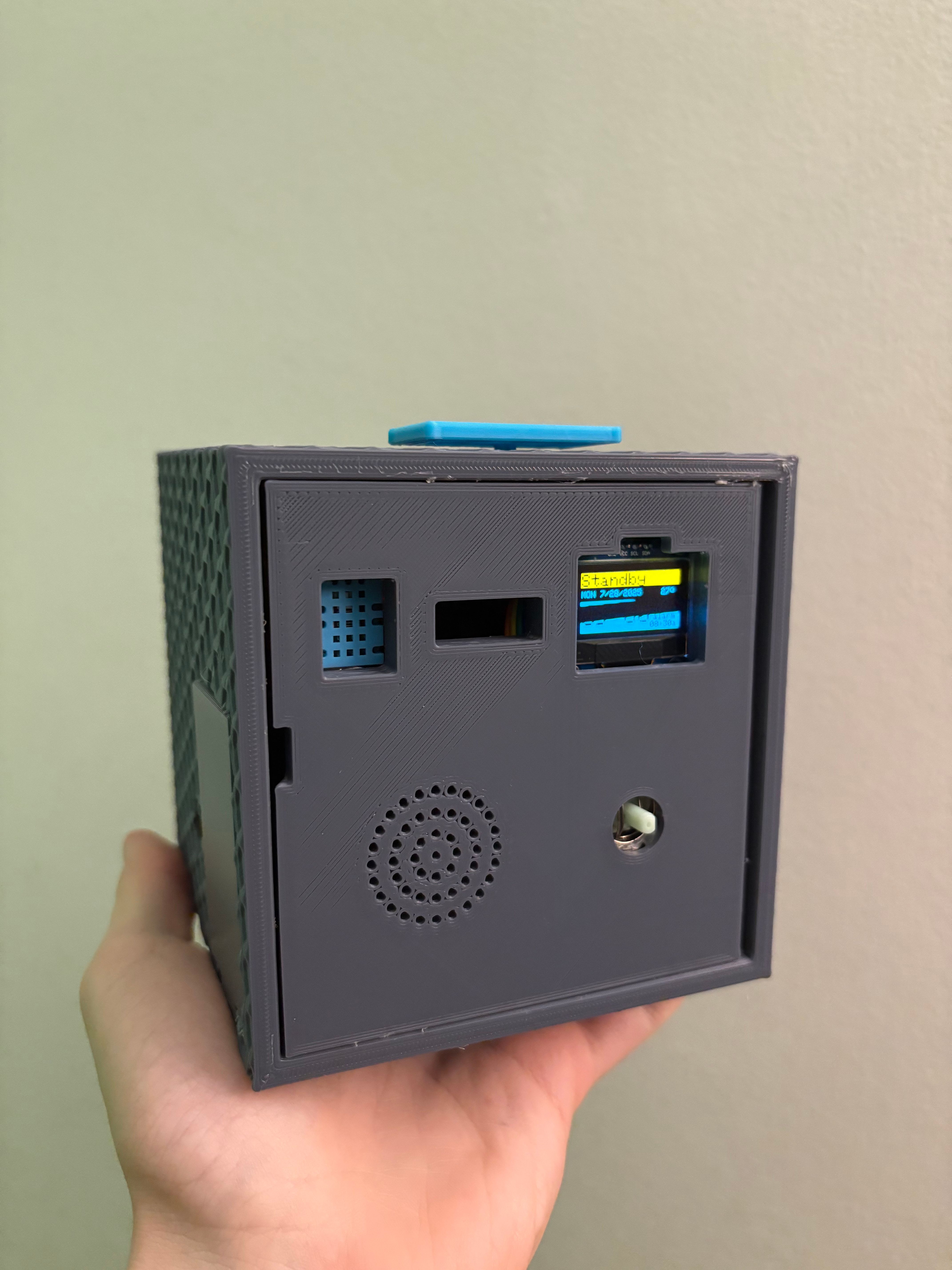
ThermAlarm V1 is an early mechatronics prototype exploring a gentler wake-up method using thermal cues instead of a sudden audio blast. It sequences warm airflow first, then vibration, then audio only as a last-resort fallback.
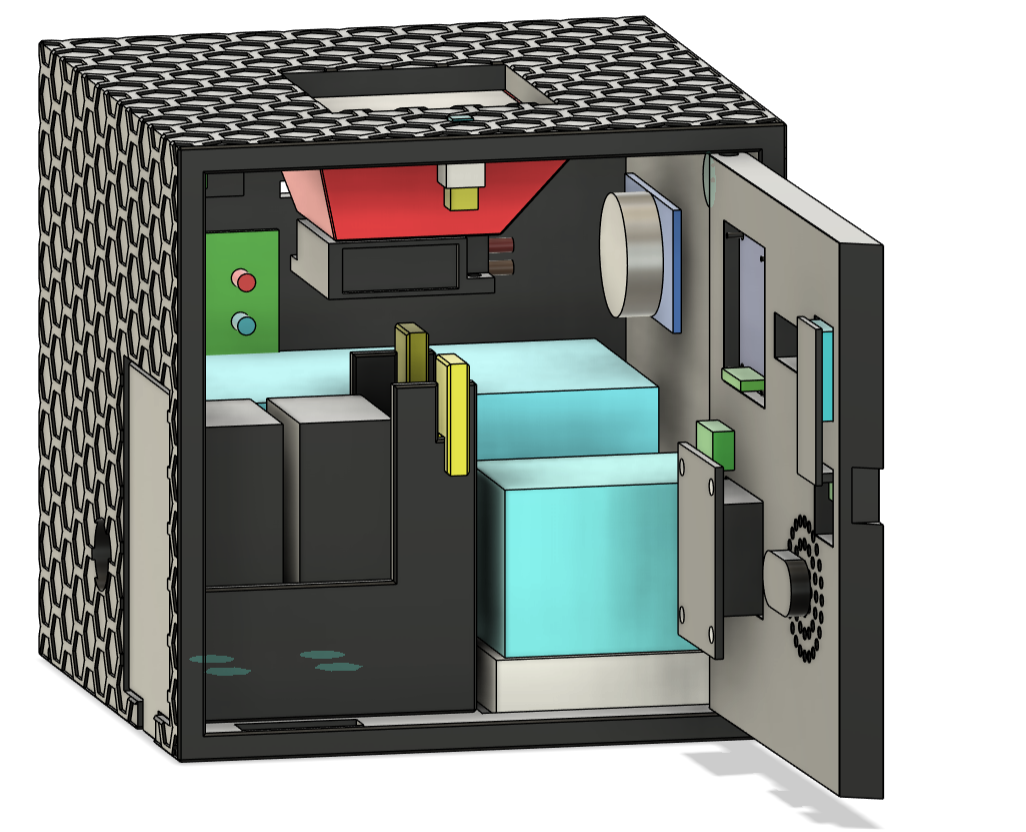
System Overview
ThermAlarm V1 combines embedded control, thermal actuation, and a compact 3D-printed enclosure to prototype a wake sequence that minimizes disruption.
- Wake sequence: Warm airflow first, vibration second, and audio last to reduce abrupt wake-ups and limit roommate disturbance.
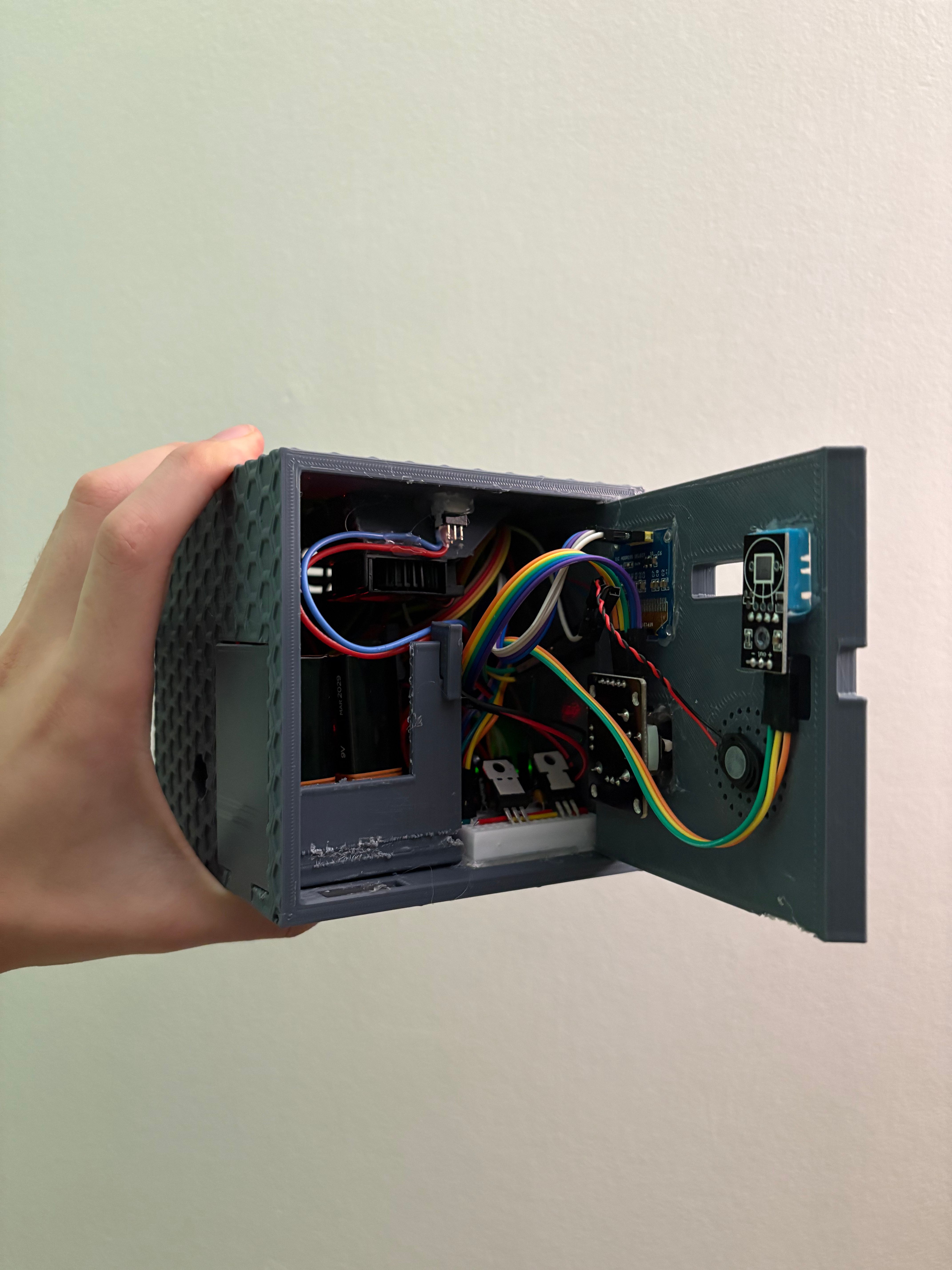
- Thermal actuation: Peltier-based heating paired with a fan to deliver controlled airflow at the user.
- Timekeeping: RTC-based scheduling so the alarm behavior is driven by real time, not power-on time.
- On-device UI: OLED + joystick input for menu navigation and user customization without a computer.
- Embedded logging concept: A top-mounted button workflow for recording sleep/wake events to support future tuning.
Problem
Conventional alarms force an abrupt, high-stress wake-up that disrupts sleep and encourages repeated snoozing. The result is poor mornings even when total sleep time is adequate.
Solution
ThermAlarm uses temperature as the primary wake cue by gently warming airflow to nudge wakefulness during lighter sleep phases. If the user doesn’t respond, the system escalates to vibration and then audio to guarantee wake-up reliability while staying ideal for roommates.
Mechanical Highlights
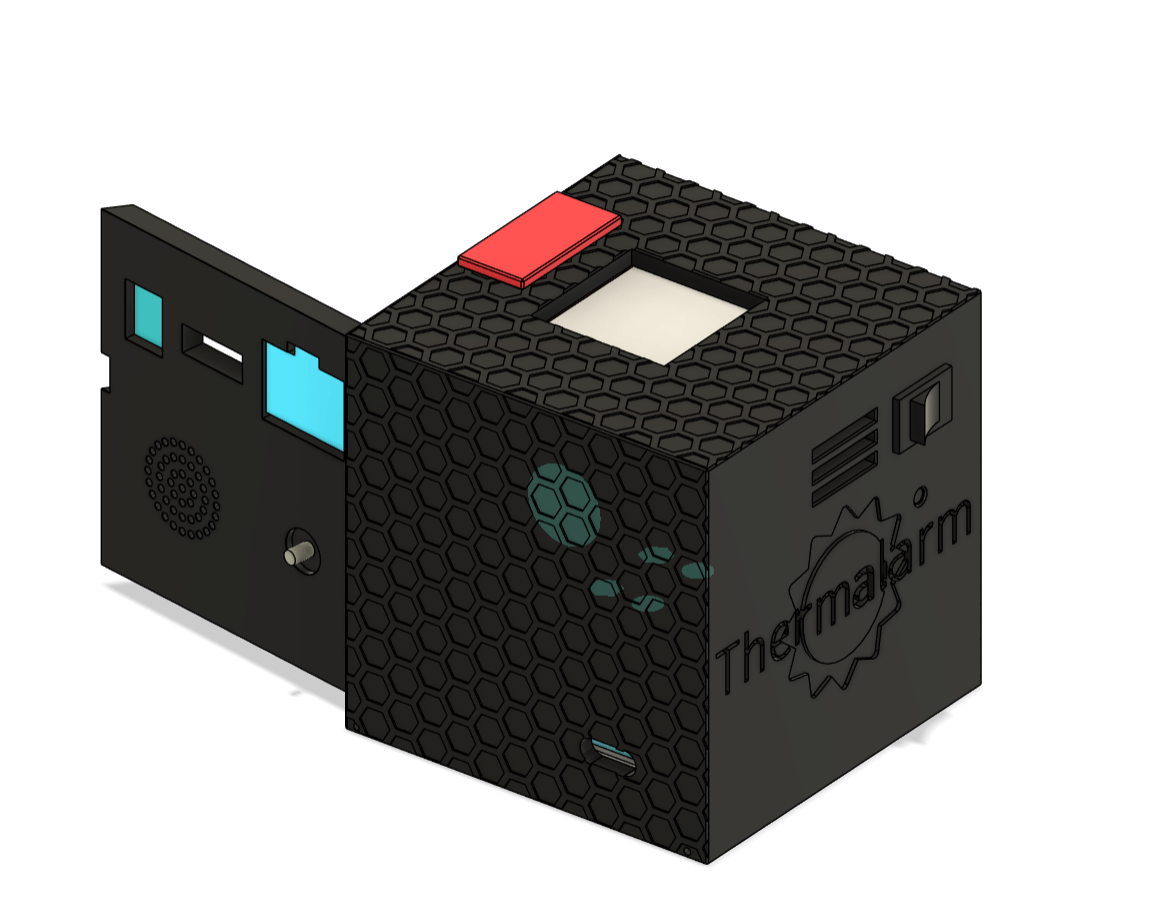
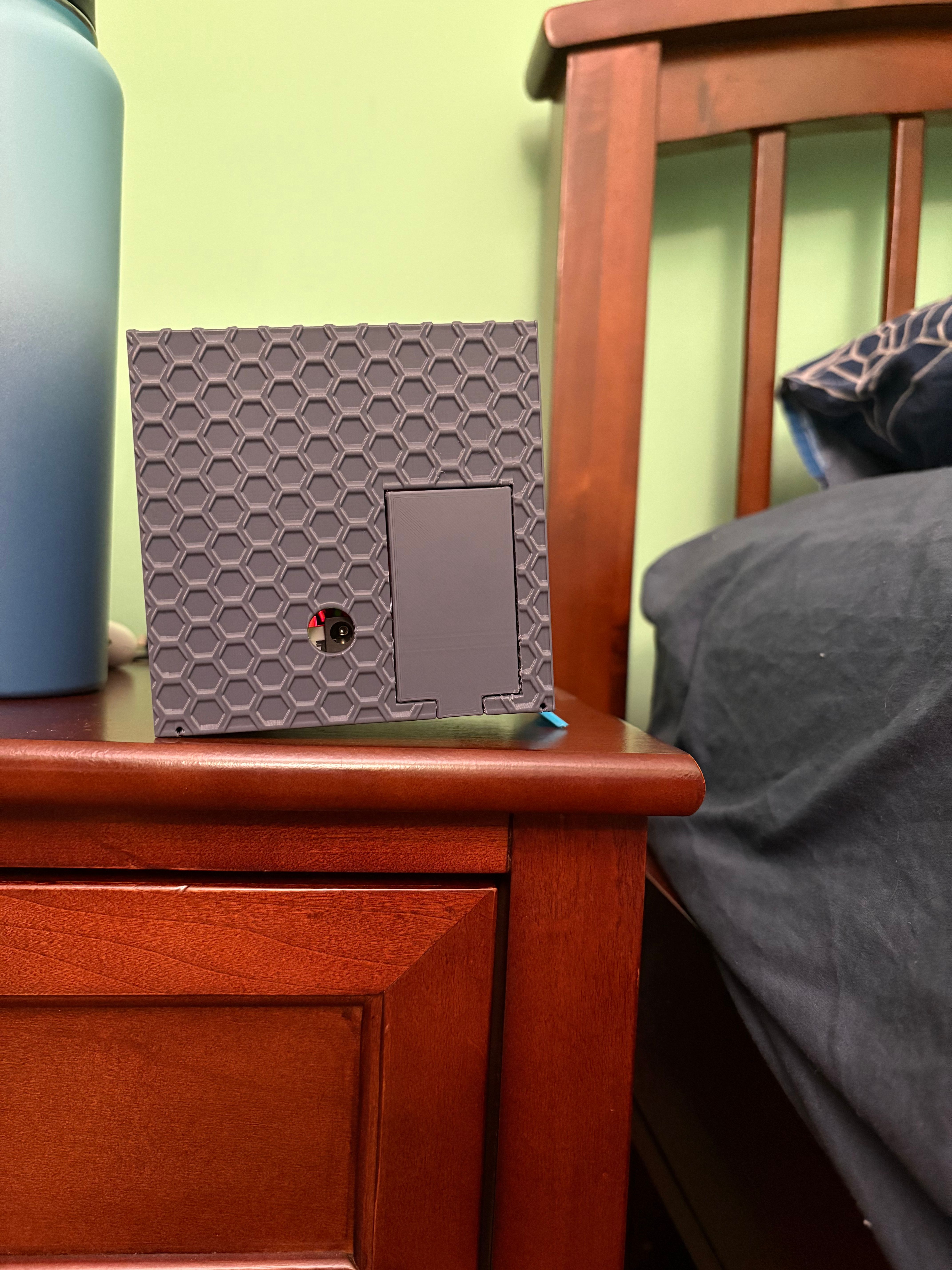
- Enclosure as a system: Designed around airflow paths, component packaging, and front-panel usability rather than a generic box.
- Serviceable access: Panelized layout supports iteration on internals without reprinting the full shell every change.
- 3D-print-first geometry: Features and tolerances chosen for FDM prototyping so iterations can be produced quickly and consistently.
- Interface layout: Front panel cutouts organized for display, joystick access, and acoustic/vibration outputs.
Software Highlights
- Deterministic control flow: Time-driven state machine for the staged wake sequence (thermal → vibration → audio).
- Menu system: Nested on-device menus for alarm settings and behavior tuning using joystick input.
- Peripheral control: Coordinated fan/heater/actuator outputs with safe fallback behavior.
- Future-ready hooks: Structured to expand into mobile/Bluetooth control and calendar-based auto-setting in later versions.
Image gallery