Project
ThermAlarm V2 | Thermal Smart Alarm Clock
ThermAlarm V2 is a thermal smart alarm clock that uses directed airflow and temperature control to reduce stressful wake-ups and improve sleep quality.
System Overview
ThermAlarm V2 uses thermal profiles and staged outputs to wake users gently while keeping reliability and portability at the core. The system is built around controllable airflow, thermal control, and low-power operation.
- Thermal profiles: Controlled heating and cooling shape wake intensity and help fall asleep faster.
- Staged wake reliability: Thermal cues lead, vibration follows, and audio serves as fallback to guarantee wake-up.
- RTC scheduling: Real-time clock drives precise wake scheduling independent of power-on timing.
- Low-power UI: E-ink and ESP32 sleep functionality reduces draw while keeping settings accessible.
- Airflow control: Directional airflow design targets user comfort and consistent thermal delivery.
- Portable architecture: Custom PCB and power pack support bedside or travel use without bulky wiring.
Problem
Traditional alarms shock users awake and disrupt sleep quality. Loud audio also disturbs roommates and makes repeated snoozing more likely.
Solution
ThermAlarm uses temperature as the primary wake cue to align with circadian thermoregulation and reduce abrupt wake-ups. Heat is delivered as a soft nudge before vibration and audio, creating a more gradual wake experience. This staged approach improves comfort while keeping reliability.
V1 to V2 Engineering Upgrades
V2 focuses on portability, durability, and user-facing refinement while keeping the core thermal wake concept intact.
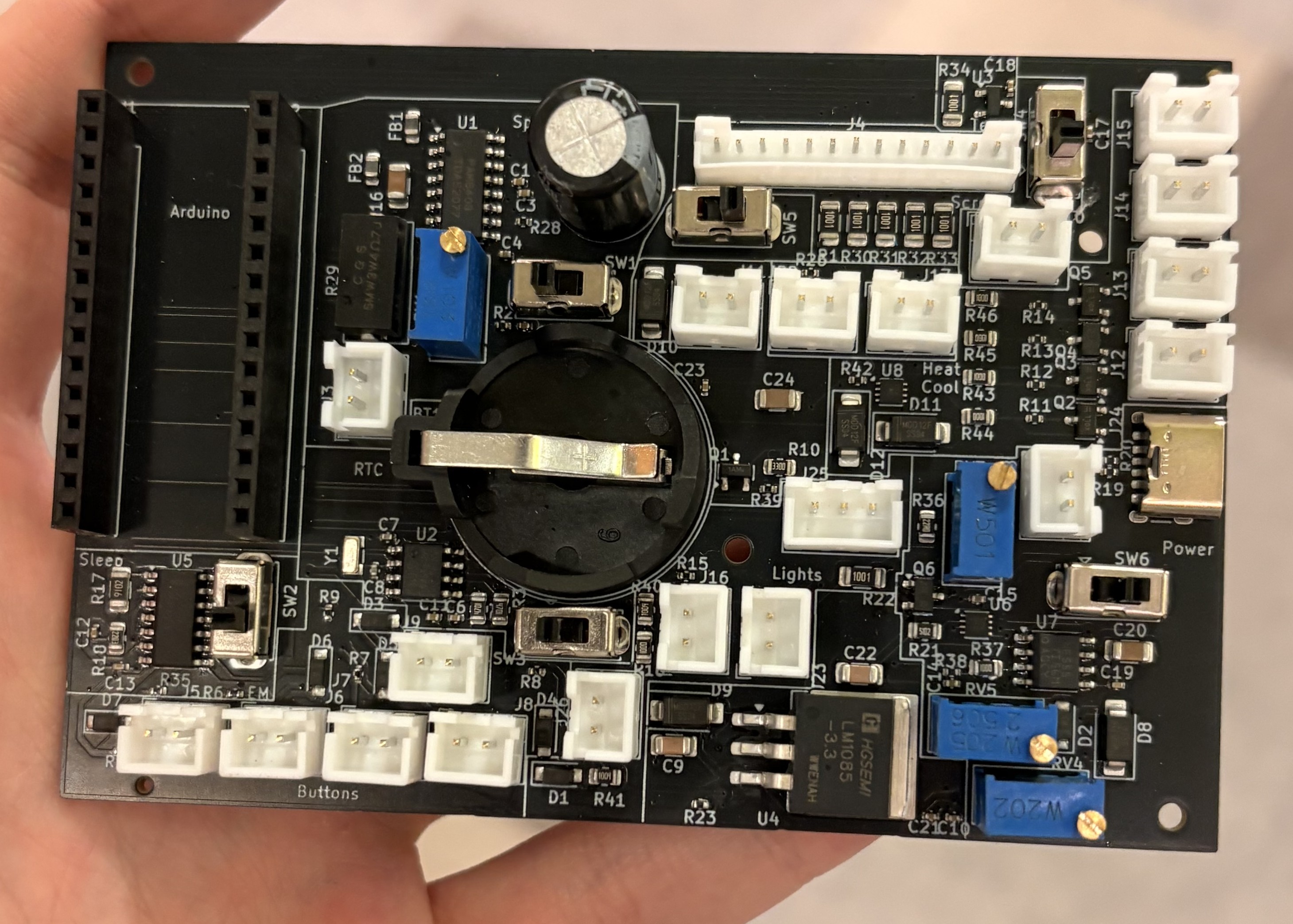
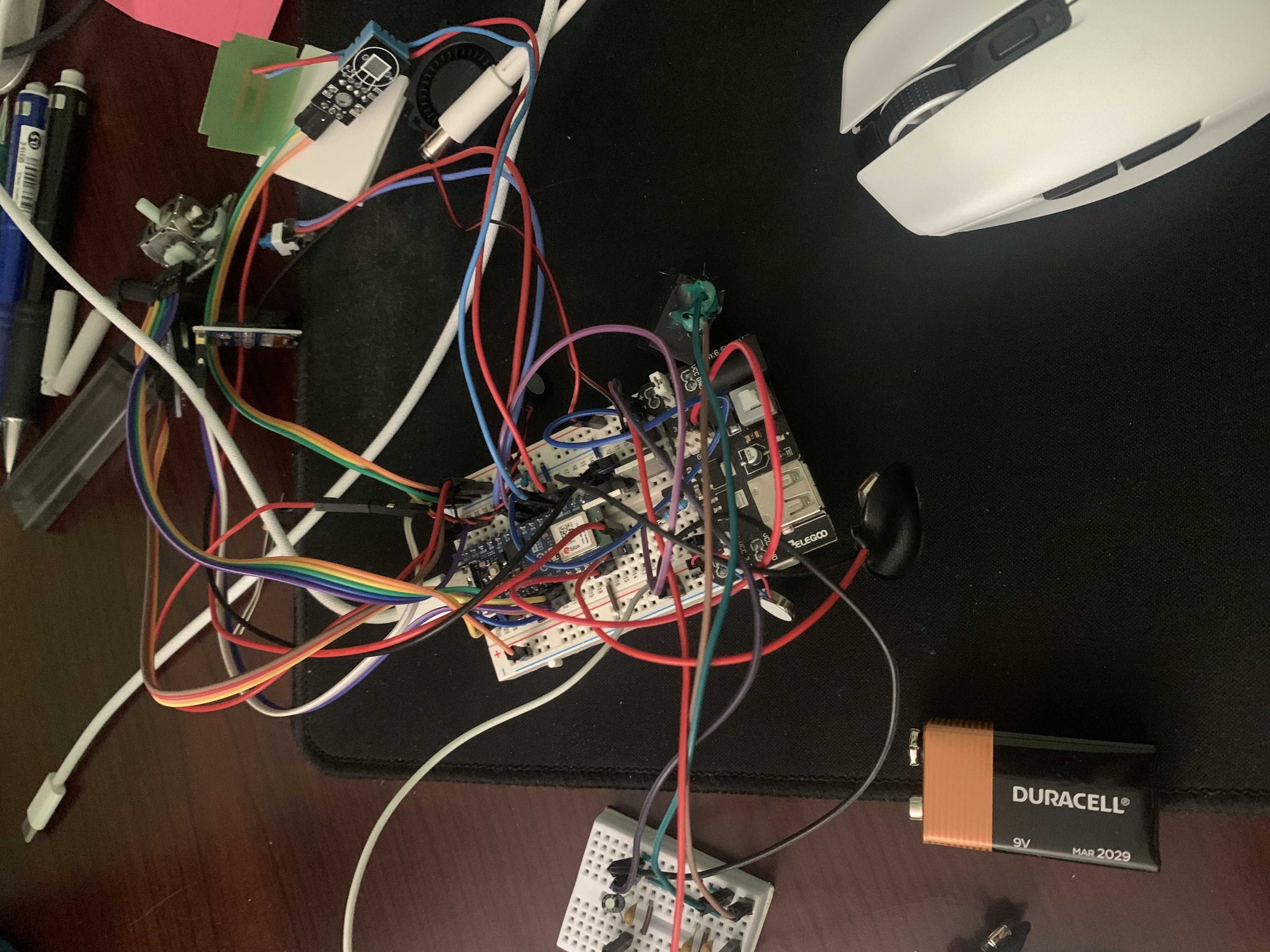
- Breadboard to custom KiCad PCB: Integrated control and power circuits improved reliability and packaging.
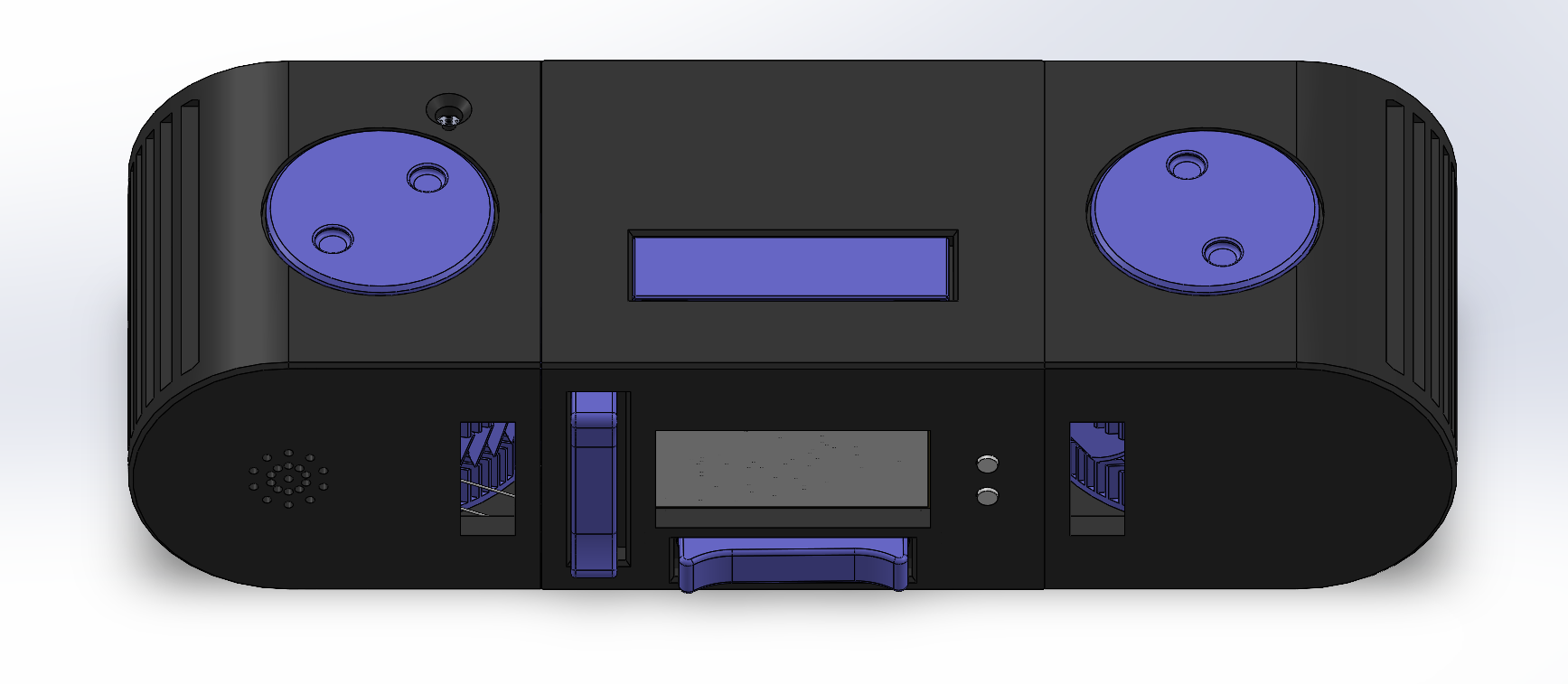
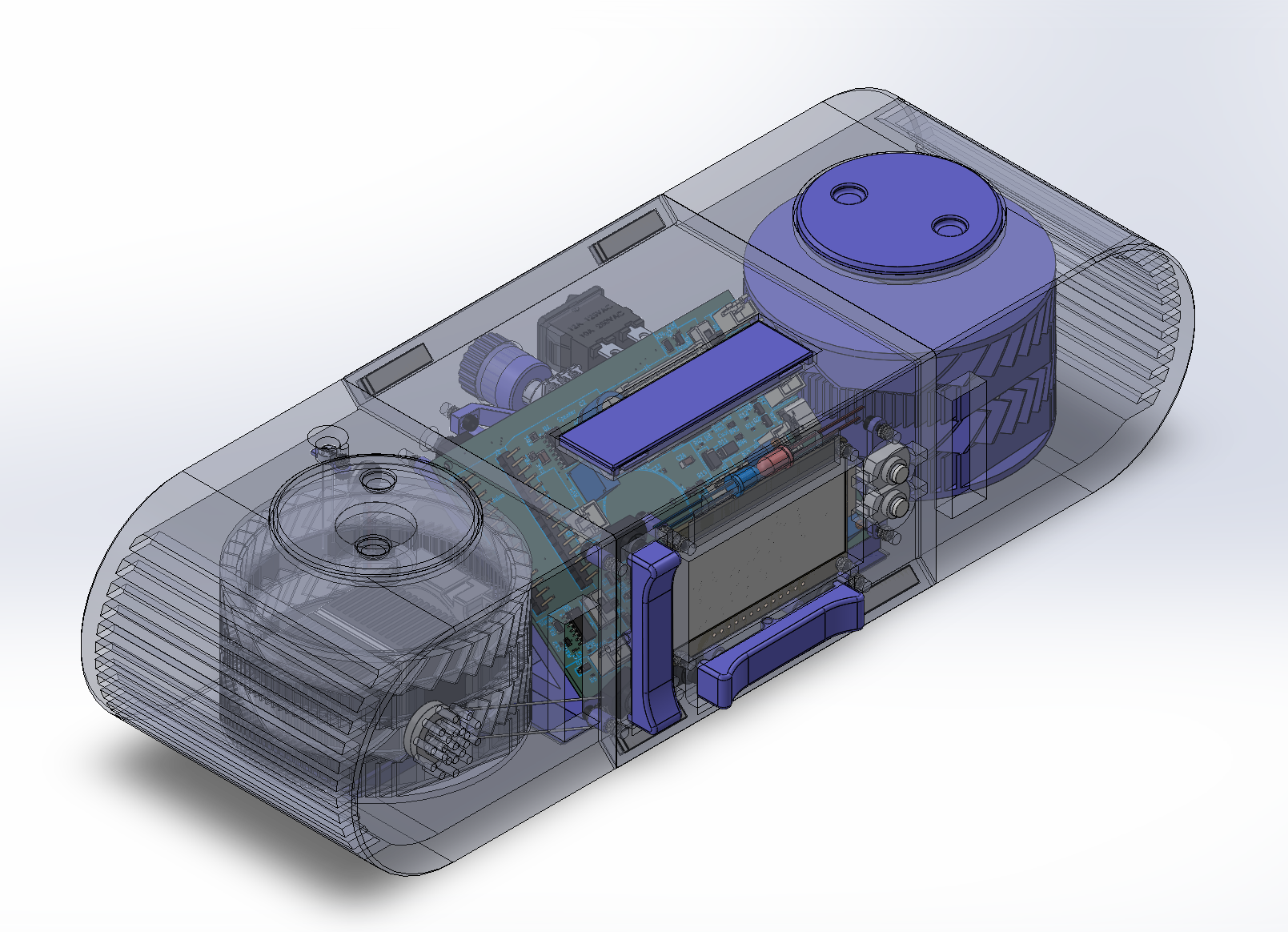
- Fusion 360 enclosure to SolidWorks redesign: Refined form and tighter integration of internal components.
- 9V battery to rechargeable pack: Added passthrough charging for overnight use without power swaps.
- OLED + joystick to e-ink + rocker switches: Lower power UI with simpler tactile interaction.
- Ambient-light lighting: LDR-driven red/blue display lighting for helping stay awake when it's light, and fall asleep when it's dark.
- Improved thermal path: Resistive heating + Peltier + heatsinking for more stable thermal control.
- Airflow direction: Kickstand tilt replaced by a rotatable fan-cover deflector for finer direction adjustment.
Mechanical Highlights
- SolidWorks enclosure: Redesigned shell optimized for internal packaging and airflow routing.
- Serviceable layout: Magnetically detachable components allow for hot-swappability for prototyping.
- Airflow deflector: Rotatable cover directs output without requiring the whole unit to tilt.
- Secure mounting: Heated inserts and screws are used to more securely hold components in place.
- Portable use case: Form factor supports bedside placement and travel without fragile protrusions.
Electronics / PCB Highlights
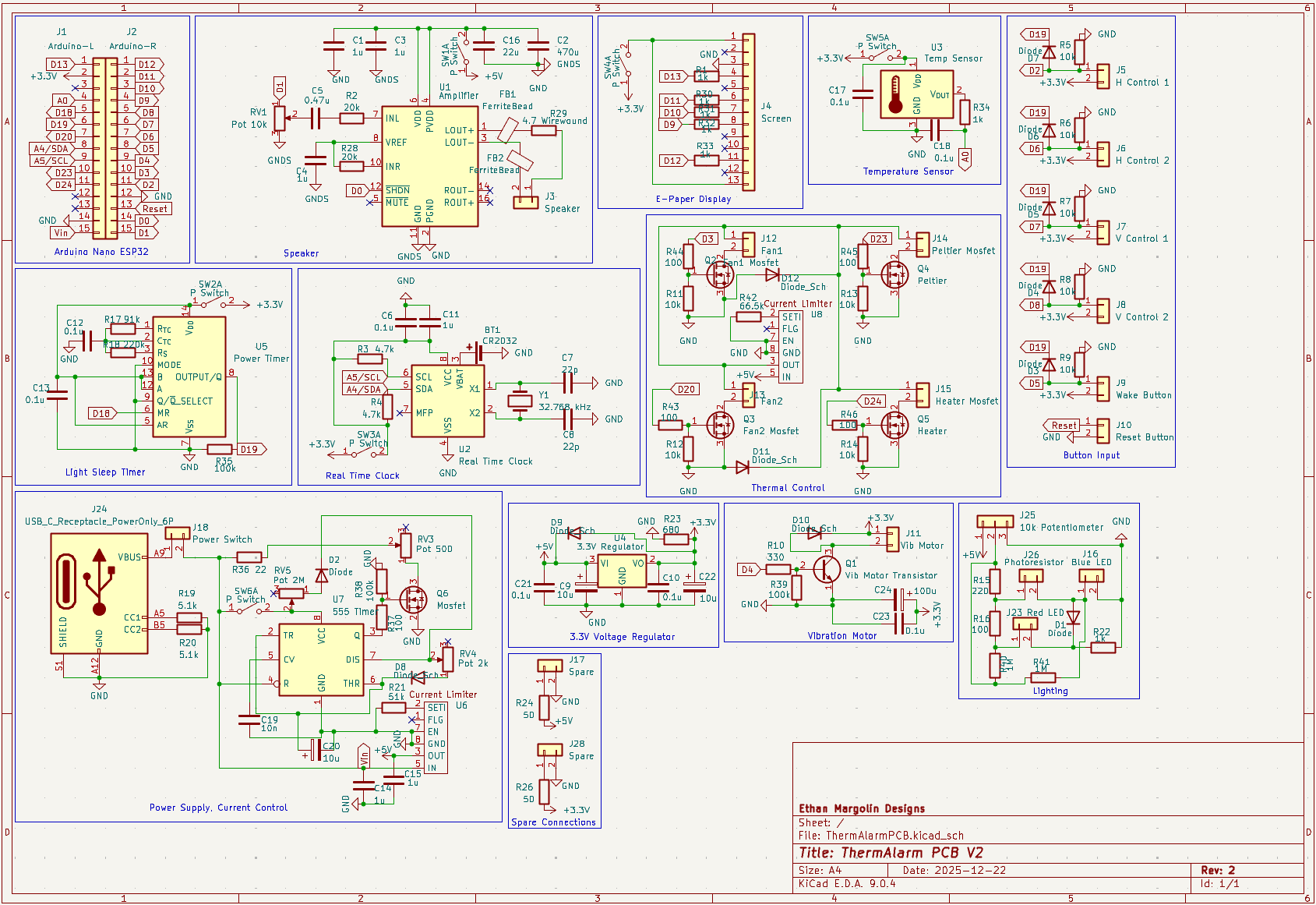
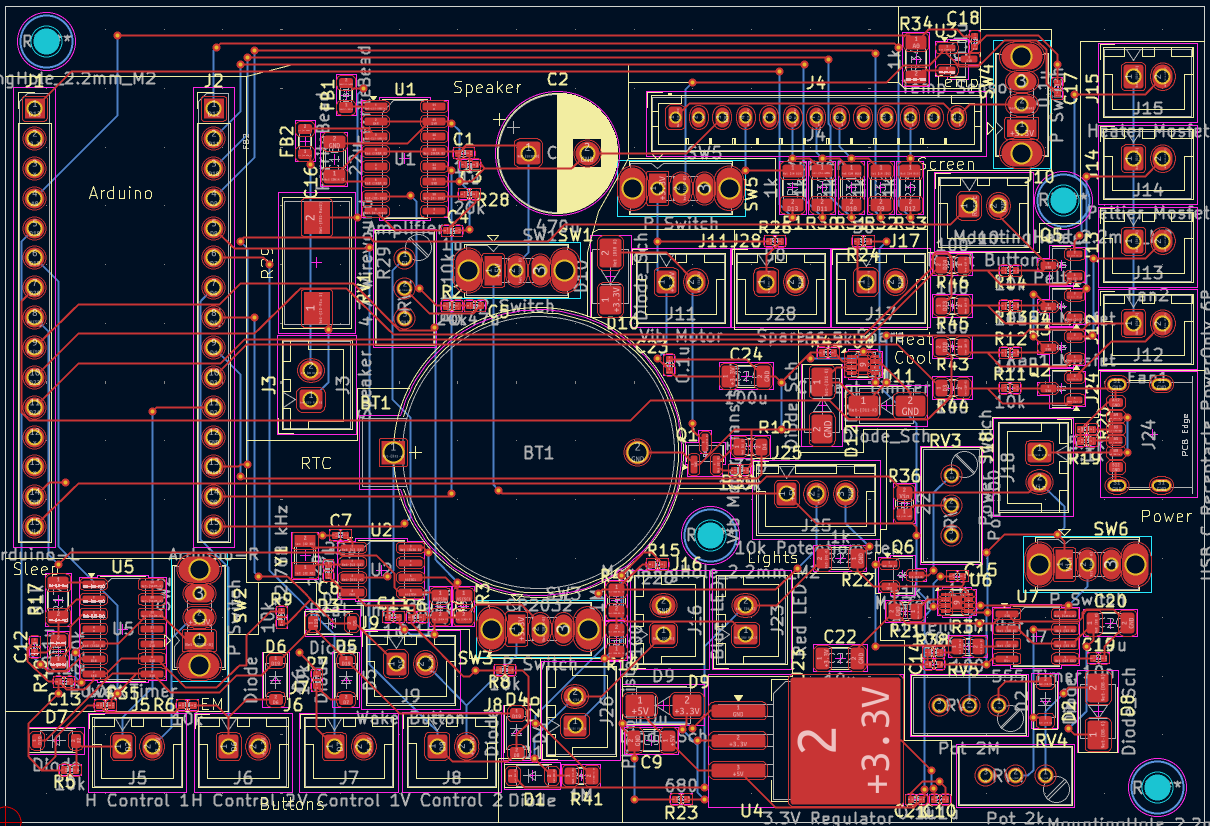
- KiCad PCB integration: RTC, power regulation, MOSFET drivers, I/O, and more on one board.
- Modular wiring: JST connectors used to easily and quickly swap components.
- Input circuitry: Button inputs and sensors integrated cleanly for stable UI behavior.
Firmware / Software Highlights
- C++ firmware: Embedded logic drives sensors, UI state, and MOSFETs for temperature control.
- Low-power states: ESP32 sleep modes reduce overnight drain while preserving schedules.
- RTC-driven scheduling: Wake logic anchored to real time rather than uptime.
- Thermal + airflow control: Staged actuation logic coordinates heat and fan behavior.
Future steps
V2 is an iteration of V1 and carries forward the same staged thermal wake concept.
- Mobile app control: Bluetooth-based control for settings and scheduling.
- Compact packaging: Further electronics and enclosure consolidation.
- Calendar sync: Auto-set alarms from upcoming events.
Sell sheet
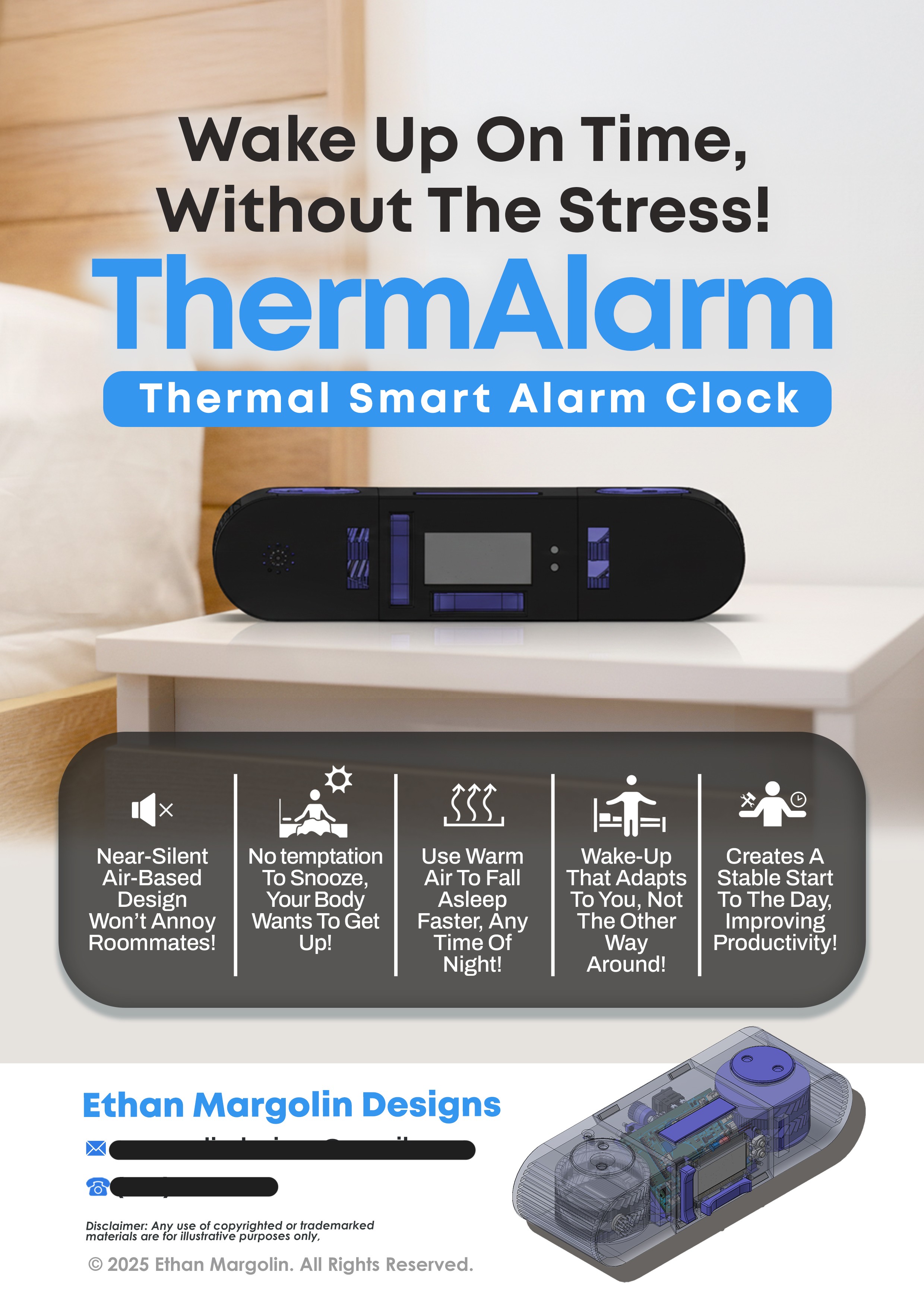
Image gallery